
+59%1
PC-IOL volume across repeat accounts
2024–2025
Across accounts purchasing PC-IOLs in both years.
Premium conversion for cataract & RLE clinics
Find where suitable patients lose clarity or momentum, then change the pathway with your team—from the first enquiry to the decision and follow-up. The business goal: better premium conversion, supported by informed patient choice.
Hands-on IOL business experience, direct patient conversations and research—translated into changes your team can use. The goal is an informed choice among clinically appropriate options, not a premium choice at any cost.
From interest to an informed decision
These are possible starting points, not a diagnosis before we meet. We agree the business objective and the measures with your leadership team.
Launching a premium service? Build the pathway and baseline before the first patient arrives. An informed choice of a standard option is not an implementation failure.
The experience behind the work
Observed purchasing patterns from the ophthalmic distribution business I co-founded and chair. Commercial experience—not a measured clinic-conversion result or a forecast for your clinic.
+59%1
2024–2025
Across accounts purchasing PC-IOLs in both years.
+47%1
2024–2025
The same starting cohort, including accounts that later reduced frequency.
90%1
2024 cohort → 2025
After account-master reconciliation, they recorded PC-IOL purchases in at least six calendar months in both years.
50%1
2025
Up from 37% in the previous year.
PC-IOL means presbyopia-correcting IOL. Figures are distributor sell-out — not implantations, clinical outcomes or national market share. Repeat accounts recorded positive annual net PC-IOL sell-out in both years; routine accounts did so in at least six calendar months of a year.
Data on file. PDDA® Studio, Track Record Analysis TR-2026-01 (2026). Aggregated distributor sell-out and account cohorts from one market. This is an observed commercial record, not a controlled PDDA® study, implantation data, clinical outcomes or national market share. Underlying records are confidential.
Review data and definitionsHow we get there
If the problem is unclear, start with a focused diagnostic. If the brief is defined, we can scope implementation directly. The full pathway engagement connects the following work.
Clarify the business objective and review how patients arrive, understand their options and decide. Check clinical suitability, affordability, expectations and workflow before deciding what to change.
Create the future-state journey across the First Mile and Last Mile, with clear roles, communication standards, consultation logic, tools and measures.
Rehearse with the team, support the named local lead and review actual use. Separate process changes from commercial results, and agree what to keep or revise.
Standard engagement boundary
4–6 months
One clinic location — or one pilot site within a clinic group — one defined premium-IOL pathway, one agreed baseline and one comparable follow-up cycle.
The clinic owns data capture and day-to-day implementation. PDDA® Studio leads diagnosis, pathway architecture, team enablement and the agreed review checkpoints.
Production design, CRM or web implementation, translation, media buying and regulatory approval are not included unless separately agreed.
Why it happens
More enquiries, more training and clearer explanations solve different problems. First identify which problem your clinic actually has.
We look at the whole pathway: who the clinic reaches, what patients expect, what is clinically appropriate, what they understand and what happens between team members. The constraint might sit before the visit, inside the consultation or after it.
My patient-facing work helps us ask questions the team may otherwise miss. Then we test those questions against your own patients and process. A preference for a standard option, a clinical limitation and an unresolved misunderstanding are different findings—and call for different responses.
The PDDA® journey model
In the PDDA® model, the First Mile prepares the decision before the visit; the Last Mile is where the clinic turns that expectation into an informed, confident choice. The handoff between them must be deliberately designed.
Before the consultation
Where expectation meets reality
Inside the consultation
PDDA® connects what shapes the decision before the visit with how the choice is made inside the consultation.
What gets redesigned
Patient preparation, consultation and the operating practices around them—so useful work is easier to repeat across the team.
Online promise and patient pre-framing — messaging, education and expectation alignment that prepare the patient to understand value.
The decision environment — values discovery, trade-off communication and shared decision-making that remove sales pressure.
Consistency and implementation — pathway logic, team alignment, communication standards, decision protocols and KPIs.
The discipline
PDDA® connects this work across the First Mile, Clinic Handoff, Last Mile and Outcome Loop. It gives the programme a structure while the diagnosis determines the tools and changes your clinic actually needs.
Measurement
We establish a baseline, redesign the pathway and repeat the same measures at follow-up. Management can see whether premium options are offered more consistently, chosen with confidence and supported by a better decision experience.
Baseline
Pathway redesign
Comparable follow-up
Offer consistency · patient choice · overall premium adoption · decision quality
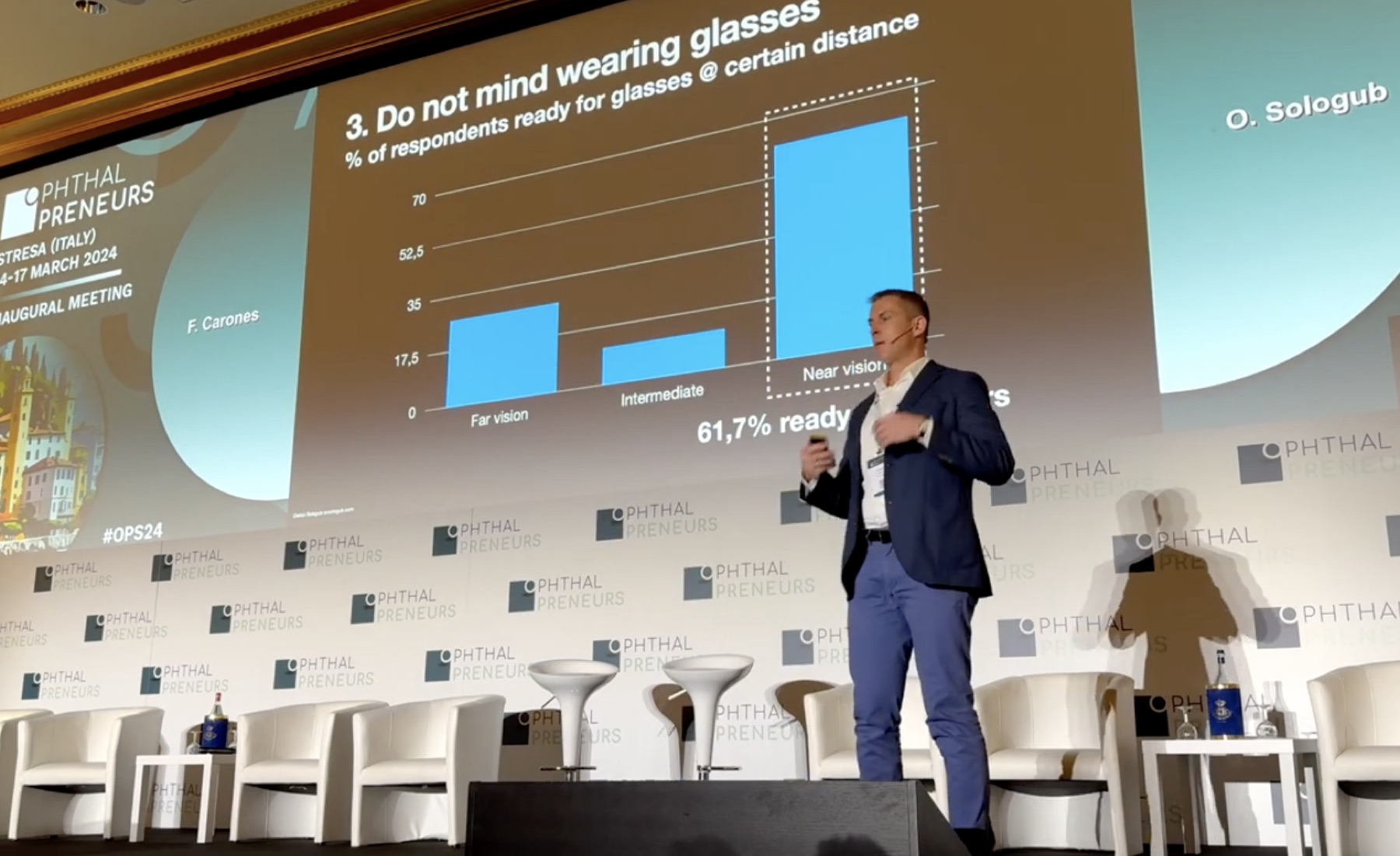
Patient decision research · Ophthalpreneurs · Stresa, Italy · 2024
Why this perspective is different
At Ophthalpreneurs 2024, I presented findings from original patient decision research to an international audience of ophthalmic business leaders. That work informs the questions we bring to a clinic. We then examine your own patients and process before designing the pathway, training and implementation.
22,700+ IOL questionnaire records from 65+ countries and territories — a source of hypotheses to test locally
Decades of work alongside private clinics and premium IOL markets
Patient communication connected to management, workflow and commercial outcomes
A system designed to reduce reliance on any individual surgeon's selling ability
Start the conversation
A 20-minute introductory call to clarify the result you want, what you have tried and whether a focused project fits. Detailed diagnosis is scoped separately.